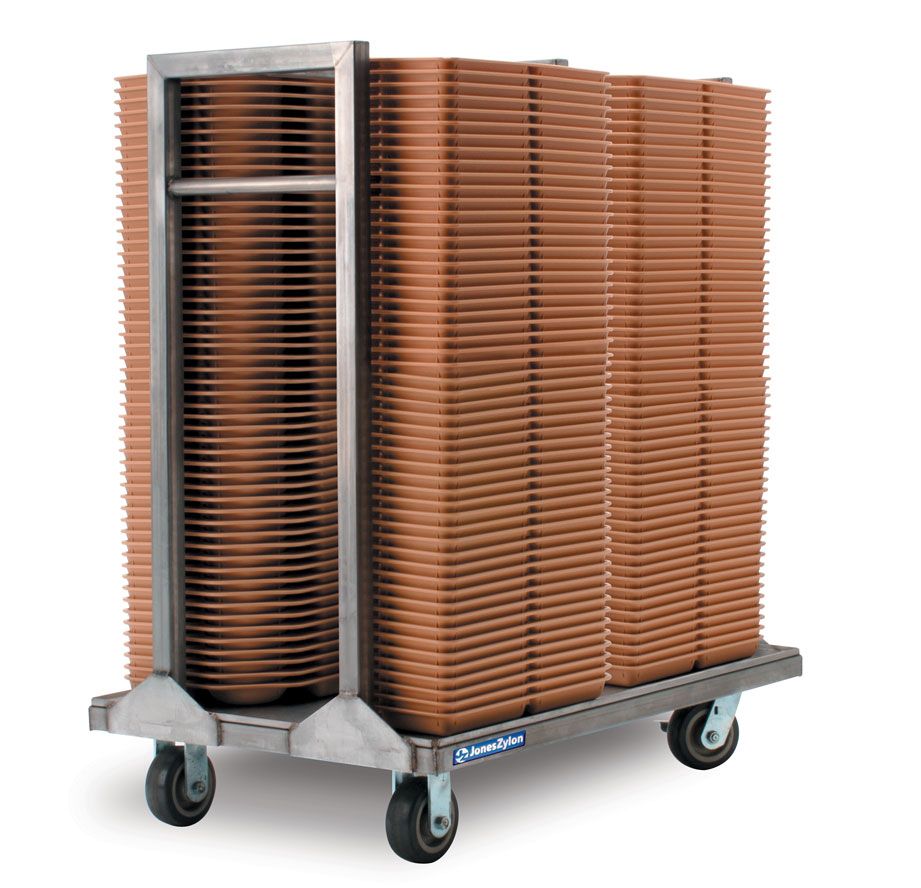
Any number of carts can be custom designed to transport and/or store items.
| Item | Model | Dimensions | Capacity | Spec Sheet |
|---|---|---|---|---|
| CAFETERIA TRAY STAGING CART | JZSCA-1 | Height: 48" / Width: 43" / Depth: 27" | 200 PPST-28, PPST-67, PPST-200 or PPST-1570 trays. Confirm other tray layouts. | Download |
Tell us what you need to transport or store, your required tray capacity, and any size or mobility constraints. We’ll help configure the right staging cart and provide facility pricing.
Use a correctional kitchen staging cart to present clean cafeteria trays at the line.
The JZSCA-1 specification names PPST-28, PPST-67, PPST-200 and PPST-1570 trays for its loading basis. The separate Racks and Carts file supplies the same named model record. Transport Carts specification (PDF); Racks and Carts specification (PDF).
Use these named tray configurations when applying the capacity shown above.
Count trays used between replenishment opportunities, including separate diet trays. Divide that quantity by the confirmed cart capacity and round up, then test the exchange during a representative meal.
Measure the loading station, operator space and replenishment path with handles and bumpers included. Keep the cart on the clean side of the facility’s trayline flow.
Count clean, dry trays separately from trays still in the wash cycle. Compare drying-rack capacity when wet trays occupy space needed for the next meal.
The JZSCA-1 sheet names PPST-28, PPST-67, PPST-200 and PPST-1570. Confirm the layout for other tray models.
Provide the tray identifier, required ready quantity, available space, route measurements and preferred loading arrangement.
The JZSCA-1 sheet says corner bumpers add 2 inches to the width and depth. Include that option when checking the quoted footprint.
Request a Quote Schedule a Virtual Demo