ICE detention food service standards and equipment
A working guide for food service directors, custody staff and purchasing teams. Source review dated October 26, 2026.
TL;DR
- The facility agreement names the ICE standard that applies. Food service is section 4.1 in PBNDS 2011 (revised December 2016) and standard 4.1 in NDS 2019, 2025 and 2026. [1] [2] [3] [5]
- Hot food: at least 140°F, or 120°F in food trays, under PBNDS 2011; at least 135°F under the NDS editions. Cold food: 41°F or below in all of them. [1] [2] [3] [5]
- Food travels in covered containers. Meal carts must be locked or supervised, and staff inspect every cart before it leaves the food service area. [1] [2] [3] [5]
- PBNDS 2011 requires food service equipment and utensils to meet National Sanitation Foundation International standards or an equivalent, and dishwasher temperatures are checked every meal. Ask for each item’s specification sheet and care instructions before you buy. [1] [2] [3] [5]
Which ICE food service standard applies to the facility?
Start with the facility agreement. It names the detention standard and edition the facility must meet, along with any later amendments. Ask the contract administrator for that text and record its title, revision date and food service section on the equipment worksheet before discussing a cart or tray.
ICE’s detention standards library lists the 2026 National Detention Standards, the 2025 National Detention Standards, the Non-Dedicated Intergovernmental Detention Standards (NDIDS), PBNDS 2011, NDS 2019 and the Family Residential Standards 2020. [4] PBNDS 2011 section 4.1 states that it applies to Service Processing Centers, Contract Detention Facilities, and state or local facilities that hold ICE detainees for more than 72 hours under an Intergovernmental Service Agreement. [1] Each NDS edition carries food service as standard 4.1. [2] [3] [5] The NDIDS, written for county and local facilities that house both inmates and ICE detainees, has one food service paragraph: a nutritionally balanced diet prepared in a sanitary and hygienic operation, three meals a day reviewed by a qualified nutritionist or dietitian, and special medical or religious diets. [6]
The table sets the equipment-related requirements side by side. Section numbers follow each document’s own outline.
| Requirement | PBNDS 2011, revised 2016, section 4.1 | NDS 2019, 2025 and 2026, standard 4.1 |
|---|---|---|
| Hot food held for service | At least 140°F, or 120°F in food trays (V.D.2.a). [1] | At least 135°F (II.C.2.b). [2] [3] [5] |
| Cold food held for service | 41°F or below (V.D.2.a). [1] | 41°F or below (II.C.2.b). [2] [3] [5] |
| Moving food between areas | Covered containers, such as pots with lids or enclosed satellite-meal carts. Food-safety procedures apply without exception to food in transit (V.D.2.g). [1] | Covered containers. Food-safety provisions apply without exception to food in transit (II.C.2.g, II.C.2.h). [2] [3] [5] |
| Carts sent to housing units | Locked if detainees deliver them, unless staff supervise them constantly (V.D.2.g). [1] | A cart without a locking device must be supervised by facility staff (II.C.2.g). [2] [3] [5] |
| Before a cart leaves the kitchen | Food service staff oversee loading of satellite meal carts, and staff inspect all food carts (V.D.2.i). [1] | Food service staff oversee loading, and staff inspect and secure all food carts (II.C.2.j). NDS 2026 adds that security staff inspect all meals, carts and trays before they enter the secured area (II.B.1). [2] [3] [5] |
| Satellite meals | Tray meals are delivered and served within two hours of plating. Hot foods sit in a heated serving line during tray assembly. Thermal bags and carts, refrigerated carts or thermal compartment trays are used. Bulk food for remote units travels in thermal containers that keep cold items below 41°F and hot items above 140°F (V.I.1). [1] | Food transported to housing units travels in thermal containers that keep cold items below 41°F and hot items above 135°F, except items served within the two-hour window (II.H.1). [2] [3] [5] |
| Soiled ware | Soiled equipment and utensils travel to the appropriate receptacles in closed containers (V.D.2.h). [1] | Soiled equipment and utensils travel to the appropriate receptacles in closed containers (II.C.2.i). [2] [3] [5] |
| Equipment and utensil standard | Meet National Sanitation Foundation International standards or equivalent standards of other agencies. Designed for durability and resistant to denting, buckling, pitting, chipping and cracking (V.J.7.a, V.J.7.c). [1] | No equipment listing is named. The facility follows FDA health and safety standards, and in 2019 and 2025 also state or local standards (II.I.6). [2] [3] [5] |
| Care information | Obtained from manufacturers or local distributors and kept on file for cleaning procedures and training. Sanitation is a primary consideration in purchasing equipment (V.J.6). [1] | Obtained from manufacturers or local distributors (II.I.6). [2] [3] [5] |
| Dishwasher temperature checks | Every meal (V.J.13). [1] | Every meal (II.I.11). [2] [3] [5] |
| Religious diet meals | Disposable plates and utensils, unless a reusable supply is set aside for kosher or common fare service only (V.G.6, V.G.10). [1] | Disposable plates and utensils, unless a reusable supply is set aside for that service only (II.F.6 in 2019 and 2025; II.F.4 in 2026). [2] [3] [5] |
What meal temperatures should go on the route sheet?
Enter the limits from the edition the facility agreement names. Under PBNDS 2011, hot foods are held at 140°F or higher, or 120°F in food trays, and refrigerated foods at 41°F or below. [1] NDS 2019, 2025 and 2026 set at least 135°F for hot food and 41°F or below for cold food. [2] [3] [5]
Time matters as much as temperature. PBNDS 2011 requires satellite tray meals to be delivered and served within two hours of plating, with hot foods in a heated serving line during tray assembly. [1] The NDS editions require thermal containers for food transported to housing units, except items served within the two-hour window. [2] [3] [5]
For the equipment trial, take readings at assembly, dispatch, unit arrival and final service. Record the food, where it was measured, the reading, the time and any corrective action. Write down the longest wait on the route, including escort availability, count interruptions and elevator access. Ask the supplier for the model-specific operating instructions, then test the cart on that route with the actual menu.
What do the standards require of meal carts?
Food moves in covered containers under PBNDS 2011 and every NDS edition. PBNDS 2011 names enclosed satellite-meal carts as one option and requires carts delivered to housing units by detainees to be locked unless staff supervise them constantly. [1] The NDS editions require staff supervision of any food cart without a locking device. [2] [3] [5] Under both, staff inspect carts before they leave the food service area. NDS 2026 adds a security inspection of all meals, carts and trays before they enter the secured area. [1] [5]
Points to check on the cart itself:
- Doors close fully over the loaded trays, so the meal travels covered.
- The latch takes the facility’s padlock or locking device, if detainees will move the cart.
- Staff can see and reach every shelf or stack during the pre-dispatch inspection.
- Hot and cold sections hold the edition’s temperatures for the full route, measured in the trial.
- A closed container or covered cart is planned for returning soiled trays and utensils. [1] [2] [3] [5]
How should trays and utensils move through in-cell meals?
Both standards treat tableware as a custody item. PBNDS 2011 and the NDS editions require the facility’s custody and security procedures to address control of utensils with a custodial hazard potential, and they name knives, cleavers, saws and tableware. [1] [2] [3] [5] Servers use tongs, forks, spoons, ladles or other utensils to serve food. [1] [2] [3] [5]
The following walkthrough gives each handoff, count and exception a place in the record.
- Prepare the meal list. Record the housing unit, destination, diet identification and quantity. Agree on the information staff may display during delivery.
- Assemble and check. Review portion placement, lid clearance, beverages and utensils with the kitchen lead. Mark the method for identifying a special meal.
- Inspect before dispatch. Ask custody staff to demonstrate their cart inspection, closure, key handling and supervision procedure. Record the responsible role.
- Transfer at the unit. Walk through the escort and handoff process, including the person accountable for the cart and meal count.
- Serve through the intended opening. Measure the actual port and observe the tray and lid arrangement during a supervised trial. Record handling difficulties and any liquid movement.
- Reconcile the return. Count articles, identify damaged or missing items, and document the route to washing and storage.
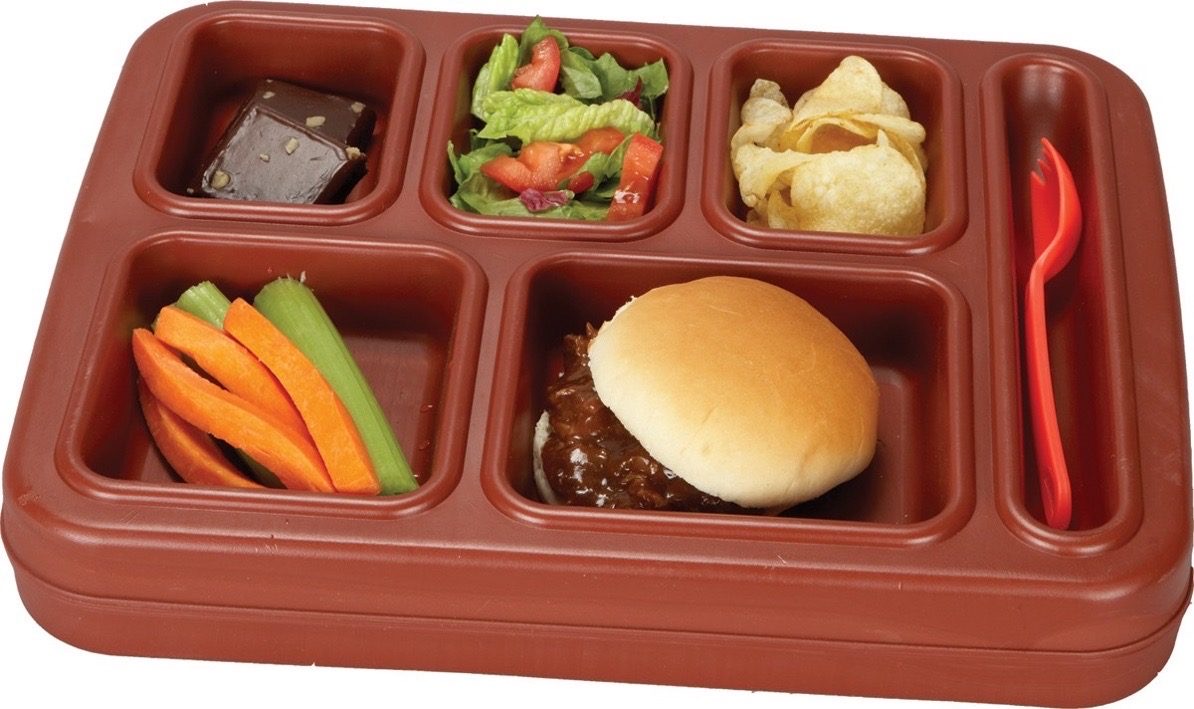
Use segregation trays as a starting point for the physical trial. Bring the actual tray and lid to the opening. Document orientation, staff grip and receiving space. Include utensils in the custody review and set the procedure for a count discrepancy before trial service begins.
How should special diets be included in equipment planning?
Religious diet service changes how much dinnerware you buy. PBNDS 2011 requires kosher trays and common fare meals to be served with disposable plates and utensils, unless a supply of reusable plates and utensils has been set aside for that service only. It also calls for separate, identified cutting boards, knives, food scoops, food inserts and other tools to prepare those foods. [1] NDS 2019 and 2025 apply the same rule to common-fare meals, and NDS 2026 applies it to religious diet meals. [2] [3] [5]
If the facility wants reusable ware for these meals, plan a separate set that staff can tell apart from mainline stock, and count it separately in the wash and storage plan. Ask the food service lead which meals arrive sealed, which need separate serving tools and which need a separate assembly area or delivery position.
Which JonesZylon product documents support the review?
PBNDS 2011 directs the food service department to obtain operation, cleaning and care information from manufacturers or distributors and keep it on file for cleaning procedures and training. It also requires food service equipment and utensils to meet National Sanitation Foundation International standards or equivalent standards of other agencies. [1] Ask for the specification sheet, care instructions and any listing that applies to each item on the quote. JonesZylon model sheets are in the specification sheet library.
Start the equipment discussion with ServeSmart, compartmentalized trays and dinnerware. Record trays per complete meal and verify complete meals per cart in the loaded trial. Cart loads equal meals divided by verified complete meals per cart, rounded up. Route trips equal cart loads divided by carts moved per trip, rounded up; plan each separate dispatch window and the return movement. Add the return, wash queue and clean-stock recovery time to the staffing worksheet.
What sanitation details should the trial record?
PBNDS 2011 sets dishwasher temperatures by machine type. A single-tank, stationary-rack, dual-temperature machine washes at 150°F with a 180°F final rinse. A single-tank, single-temperature machine washes and rinses at 165°F. A multi-tank conveyor machine washes at 150°F, has a pumped rinse at 160°F and finishes with a 180°F final rinse. Final rinse water runs at 15 to 25 psi, and every item goes through all cycles in racks, trays or baskets that expose all food-contact surfaces (V.J.7.g). Where a three-compartment sink is used, hot-water sanitizing means at least 30 seconds in water held at 171°F (V.J.7.f). [1] Dishwasher temperatures are checked every meal under PBNDS 2011 and the NDS editions. [1] [2] [3] [5]
Check each tray, lid, cup and utensil against those numbers. Compare the temperature range printed on each product sheet with the final rinse temperature, and run the actual items through the facility’s machine during the trial. PBNDS 2011 also requires items to air-dry after sanitizing on drain boards, mobile dish tables or carts, utensils to be stored in perforated pans, and glasses, tumblers and cups to be inverted before storage (V.J.7.g, V.J.7.h). [1] Review tray drying racks using the proposed tray and lid.
Draw the clean and dirty staging locations. Include the space needed for the meal’s returned articles and the time before clean stock reaches the next assembly. Send the route worksheet and the facility’s edition with a Request a Quote, or Request Free Samples for the tray evaluation.
Frequently asked questions
What hot and cold food temperatures do the ICE standards set?
PBNDS 2011 section 4.1 calls for hot foods at 140°F or higher, or 120°F in food trays, and refrigerated foods at 41°F or below. NDS 2019, 2025 and 2026 standard 4.1 call for at least 135°F for hot food and 41°F or below for cold food. Use the edition named in the facility agreement. [1] [2] [3] [5]
Which ICE section addresses food service?
Section 4.1, Food Service, in PBNDS 2011 (revised December 2016), and standard 4.1, Food Service, in NDS 2019, NDS 2025 and NDS 2026. [1] [2] [3] [5]
Do the ICE standards require locked meal carts?
PBNDS 2011 requires food carts delivered to housing units by detainees to be locked unless staff supervise them constantly. NDS 2019, 2025 and 2026 require any food cart without a locking device to be supervised by facility staff. [1] [2] [3] [5]
How do we check a tray for in-cell delivery?
Measure the actual opening and review the tray, lid and meal together in a supervised trial. Record orientation, grip, liquid movement and the custody handoff.
Request equipment documentation for your review
Include the facility agreement, adopted standards edition, delivery route and responsible food service contact.
800-848-8160 | solutions@joneszylon.com | 305 Center Street, West Lafayette, OH 43845
Sources
- ICE Performance-Based National Detention Standards 2011, revised December 2016, section 4.1 Food Service. Full PDF read from ice.gov. https://www.ice.gov/doclib/detention-standards/2011/4-1.pdf (accessed 2026-10-26)
- ICE National Detention Standards 2019, standard 4.1 Food Service. Full PDF read from ice.gov. https://www.ice.gov/doclib/detention-standards/2019/4_1.pdf (accessed 2026-10-26)
- ICE National Detention Standards, revised 2025, standard 4.1 Food Service. Full PDF read from ice.gov. https://www.ice.gov/doclib/detention-standards/2025/nds2025.pdf (accessed 2026-10-26)
- ICE detention standards library, Detention Management page. https://www.ice.gov/detain/detention-management (accessed 2026-10-26)
- ICE National Detention Standards, revised 2026, standard 4.1 Food Service. Full PDF read from ice.gov. https://www.ice.gov/doclib/detention-standards/2026/nds2026.pdf (accessed 2026-10-26)
- ICE Non-Dedicated Intergovernmental Service Agreement Standards (NDIDS), section III.A Food Service. Full PDF read from ice.gov. https://www.ice.gov/doclib/detention-standards/2025/ndids2025.pdf (accessed 2026-10-26)