Why is jail food hot at loading but cold at the housing unit?
TL;DR
- Record food condition at loading, arrival and service, alongside cart identity, power state and elapsed time.
- A temperature complaint needs a route record and equipment check. A tray material range does not establish a food hold time.
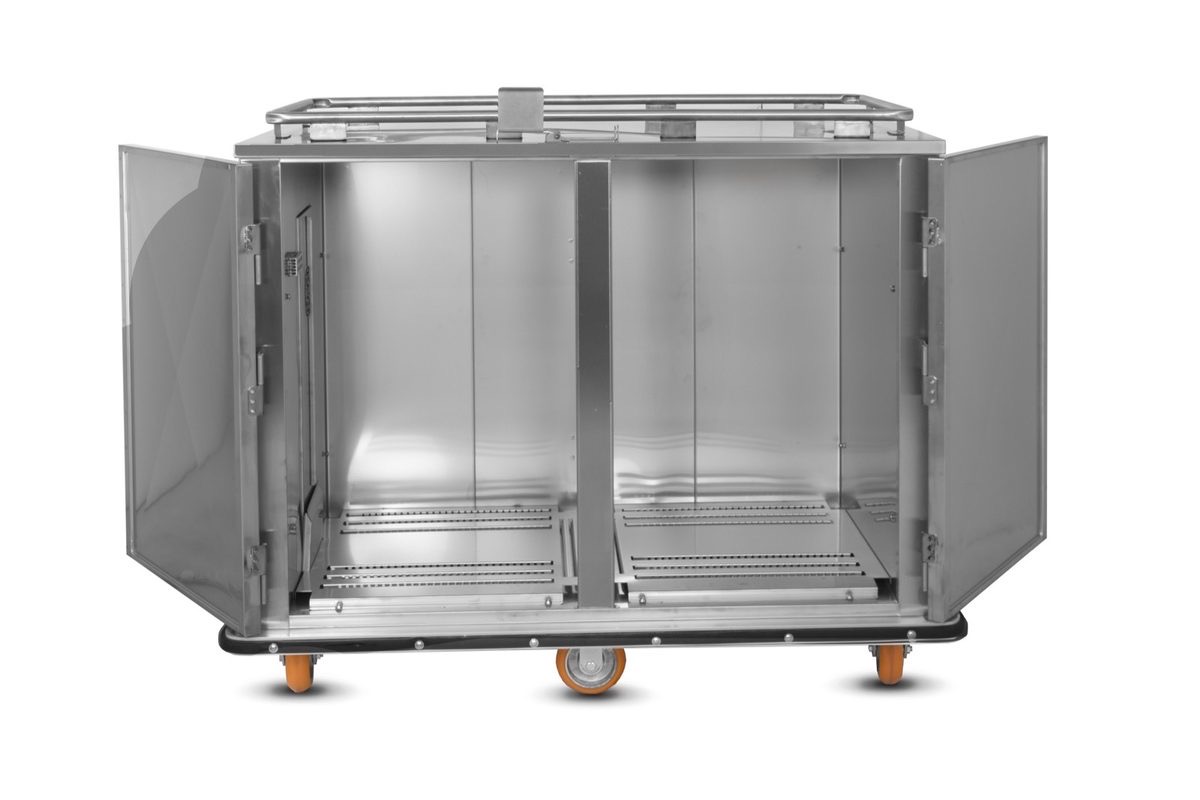
When food is hot at loading and cold at service, compare what happened between those observations. Record the food measurement, time, cart identity, loading arrangement, power state and waiting periods at each stage. Give that record to the responsible food service and maintenance staff so they can evaluate the route and equipment together.
This is a suggested investigation sequence. Use the facility’s approved food-temperature limits, measurement method and corrective actions throughout. Keep any food that fails those requirements under the control of the responsible food service staff.
Was the food measured at loading and at service?
Start with comparable measurements. Record the menu item, tray position, measurement time and approved instrument. Keep the cart display reading in a separate field. A comment such as “cart was hot” leaves the actual meal condition unclear. Ask staff to identify which food they measured and whether service had already started.
Include the first and last service observations specified by the facility’s evaluation plan. Record delays between arrival and handoff. The existing transport temperature planning article explains how to organize that record. The purpose here is to locate the stage that needs attention.
Did the heated cart operate as expected?
Record the exact model and unit identifier, the visible control state and the power source used before dispatch. Have authorized maintenance staff evaluate a suspected heater problem using the applicable instructions. Avoid turning an observation sheet into an improvised repair procedure. Keep the service record and the meal observation record connected by cart identity.
The DOJ OIG’s archived inspection reported inoperable heating components on mobile carts at two facilities. The report did not establish a food-safety risk from observed delivery delays. That finding supports checking the equipment; it does not establish the cause of a complaint at another facility. [1]
The JZH-54-RH specification identifies a rear-mounted removable heating assembly. It also lists 120 volts, 1700 watts and 14.2 amps. Those ratings identify this model’s documented electrical requirements. Have qualified staff review the actual supply and operating instructions before evaluating the unit. [2] Use maintenance planning to assemble model and service information.
Which compartment held the affected food?
Record where every hot and cold component traveled. The JZHA-120 sheet calls that model a heated/ambient cart and places its heating system on the left side. The sheet does not specify refrigeration. [3] Identify the actual compartment and the approved method for each food component before comparing temperature records.
A phrase such as “hot and cold cart” can leave purchasing and operating staff with different expectations. Attach the model sheet to the loading plan and label the compartment functions. The dual-temperature cart page separates configuration choices for the equipment review.
Did loading and waiting change on the problem route?
Write down when assembly began, when loading ended, when the cart departed and when service began. Record the periods when doors were open and the reasons for those openings. Compare an ordinary service with the service that produced the complaint. Keep differences in menu, staffing and route visible.
Include waits at elevators, controlled doors and receiving points in the internal review. Ask the responsible staff whether the receiving team was ready. If a late meal was added after dispatch preparation, note the change and the resulting handling. These observations can help the facility choose which part of the process to retest.
Did the tray or loading arrangement change?
Identify tray model, lid model, stack arrangement and rack configuration. The JZH-54-RH sheet lists 54 standard SmartTrays or 39 SmartTray XD trays. [2] A change to deeper trays therefore needs a new loading review using the relevant published count and confirmation of the complete arrangement.
Calculate route loads from the accepted configuration. Record whether staff added a dispatch, split destinations or extended assembly to accommodate the new tray. These are scheduling inputs for the investigation. They do not establish a temperature result. Use the compatibility guide when preparing the configuration record.
Does an insulated tray establish a delivery time?
The PRTS-5000 specification describes a copolymer polypropylene shell with foam insulation and lists a material range of -40 to 190 degrees Fahrenheit. [4] That range is a product specification. It provides no measured food hold time for your menu, load or route.
For an insulated tray evaluation, identify the tray and lid and document the approved stacking method. Keep the same menu, portion and measurement method when comparing trials. Request any applicable operating or test documentation before assigning an expected delivery window to the equipment.
What should a useful complaint record contain?
- The date, meal, destination and staff receiving the complaint.
- Food measurements with times and the approved measurement method.
- Cart, tray and lid identities, plus the loading arrangement.
- Loading, dispatch, arrival and service times.
- Power observations, equipment faults and maintenance references.
- Food disposition and corrective action recorded by authorized staff.
Keep repeated complaints linked to their individual records. Compare patterns by cart, route and meal type without deciding the cause in advance. When a field was not recorded, mark it as missing. A reconstructed estimate should remain distinguishable from an observation taken during service.
What evidence should accompany a replacement-cart inquiry?
Send the accepted tray configuration, route description and relevant equipment observations with the quote request. Include the required compartment functions and the available electrical supply for qualified review.
After an authorized equipment or process change, repeat the facility’s evaluation and retain the results. Use the same record fields so the food service director can compare the new service with the earlier complaint. The meal-delivery family page provides the next equipment selection step.
Frequently asked questions
Can a hot cart display prove that every meal is hot?
Record the required food measurements separately from the cart display, using the facility’s approved procedure.
Does the JZHA-120 actively refrigerate its second compartment?
Its specification identifies heated/ambient operation and does not specify active refrigeration. [3]
Can this article set our delivery time limit?
Use the facility’s approved limits and a documented evaluation of the actual menu, load, power state and route.
Talk to a JonesZylon corrections specialist.
800-848-8160 | solutions@joneszylon.com | 305 Center Street, West Lafayette, OH 43845
Sources
- DOJ OIG inspection, findings about cart heaters (archived research, accessed September 7, 2026). https://oig.justice.gov/reports/concurrent-inspections-bop-food-service-operations (accessed 2026-09-07)
- JZH-54-RH heated cabinet (manufacturer specification). /pdf/Equipment/Heated%20Carts/JZH-54-RH.pdf (accessed 2026-09-08)
- JZHA-120 heated/ambient cart (manufacturer specification). /pdf/Equipment/Dual%20Temperature%20Carts/JZHA-120.pdf (accessed 2026-09-08)
- PRTS-5000 insulated tray (manufacturer specification). /pdf/Dinnerware/Insulated%20Trays/PRTS-5000.pdf (accessed 2026-09-08)