How is food delivery managed in prisons and jails?
TL;DR
- Plan the meal as a complete cycle: confirm counts, assemble, load, dispatch, hand off, collect, wash and return dry pieces to inventory.
- Assign a count and a responsible staff member to each handoff. Use the facility’s approved food-handling and custody procedures.
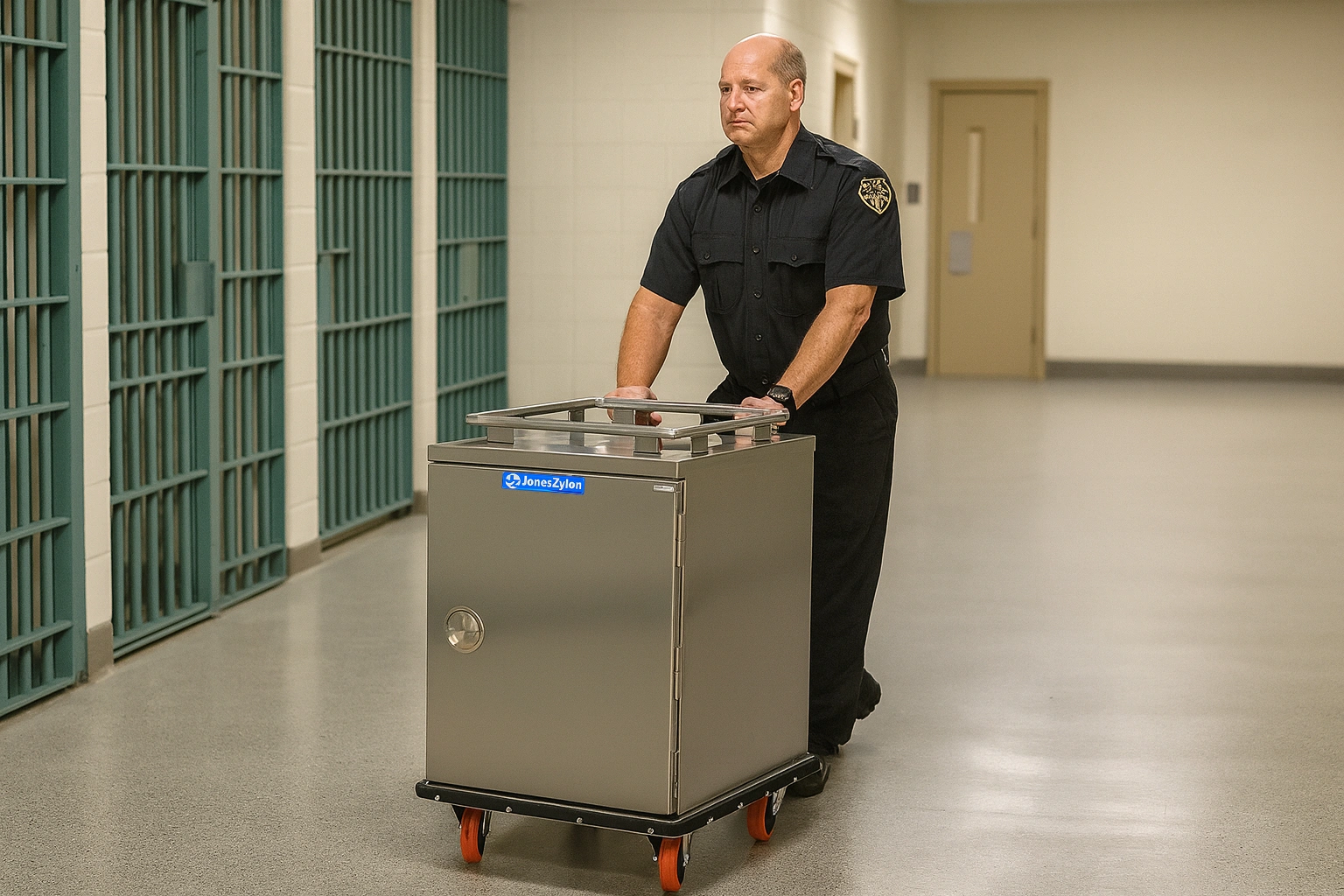
A workable prison meal-delivery plan follows the food and equipment from the kitchen to the housing unit and back. Start with the authorized meal count and diet list, assign each load to a destination, document service, then reconcile trays and utensils before the next meal. The sequence below is a planning worksheet for kitchen and custody staff to adapt to their own operation.
The BOP Food Service Manual describes satellite service and advance notice of tray numbers and types. Each jail should identify its own governing procedures before adopting a dispatch sheet. [1]
Who confirms the meal count before tray assembly?
Choose the local role that supplies the current population and diet counts. Record when the kitchen received that list and who can authorize a change. Separate routine meals, approved special diets and meals held for delayed service. Give each destination a clear name that kitchen and custody staff both recognize.
Keep changes visible after assembly begins. If a resident moves between units, enter the changed destination and the person who acknowledged it. A handwritten addition without a corresponding dispatch change leaves staff unable to determine which cart should carry the meal. Use the same revision of the list at assembly and handoff.
How are meals assembled for housing-unit delivery?
Map the approved menu to the tray compartments and identify the utensils, lids and separate containers required. Record the portioning tool for each item. Ask the diet supervisor to resolve portions that exceed the available compartment space before the production line starts. Keep identification readable throughout loading and service.
The standard SMART-5 specification lists a 16.7-ounce large compartment; the SMART-5-XD sheet lists 27.5 ounces for the corresponding compartment. These are model specifications. Evaluate the actual menu and approved portions when deciding which tray to sample. [2] [3] The SmartTray family page keeps tray and lid identities together.
How do staff turn tray counts into cart loads?
ServeSmart carts come in six capacities: 54, 90, 136, 162, 170 and 190 SmartTrays, as listed in the ServeSmart Buying Guide.
Calculate planned loads by dividing the route’s tray requirement by its confirmed usable load and rounding upward. Count hot and cold containers separately when a meal uses several pieces. Also record whether carts leave together or whether a cart must return before the next load departs. That distinction determines the schedule staff need to test.
What belongs on the dispatch record?
- Destination, meal period, list revision and person approving the count.
- Meal types and quantities, including separate cold components.
- Cart identity, tray model and accepted loading arrangement.
- Required food-condition checks and loading completion time.
- Dispatch time, assigned staff and expected receiving contact.
- Exceptions, delayed meals and the staff member handling each exception.
Walk the proposed route with kitchen and custody representatives. Record the doors, elevators and controlled handoffs that affect movement. Keep security-sensitive route details in the facility’s internal record. Use the cart and tray compatibility guide to prepare the equipment portion of the review.
What happens when the cart reaches a housing unit?
Plan a handoff that checks the destination and meal quantities against the dispatch record. Give staff a defined way to report a missing meal, incorrect diet or late delivery. Record arrival and service times separately so a wait at the unit remains visible. Follow the approved procedure for food measurements and any corrective action.
For meals served through a food port, include the loaded tray and lid in the facility’s food-port evaluation. The segregation tray page provides model dimensions and measurement questions. A product family name alone does not establish fit.
How are trays and utensils returned to the kitchen?
Define who counts returned pieces and where that count is recorded. Track trays, lids, cups and utensils as separate item types. Keep unused meals, returned service items and pieces removed from service identifiable under the approved local process. Have custody staff manage discrepancies through their accountability procedure.
Plan the return route and receiving space before changing cart quantities. Observe whether returning equipment reaches the dish room while another meal is being assembled. Record cart turnaround time from return through cleaning and release. The tray and utensil reconciliation article provides a suggested record for this handoff.
How does the wash and dry cycle prepare the next meal?
Document the facility-approved sequence for receiving soiled ware, preparing it for washing, washing and sanitizing, air drying, inspection and dry storage. Use the machine and product instructions for operating conditions. The BOP manual includes guidance on racks designed for specific trays, pans and utensils. [1]
Count clean, dry pieces available when the next assembly period begins. Record pieces still in use, waiting for washing or withheld for inspection separately. Check drying racks with actual samples and the expected return pattern. An inventory total should identify where its pieces are available for use.
What should staff record during a trial meal service?
Use an ordinary menu and the intended route. Record assembly completion, dispatch, arrival, service completion, return and release of dry equipment. Note staffing changes, count revisions and equipment substitutions alongside the times. Retain the exact model sheets with the trial record so the purchasing request describes the arrangement staff evaluated.
Frequently asked questions
Does every prison use the same meal delivery method?
Facility procedures determine the method. Document whether your route carries bulk pans, complete trays or separate hot and cold components.
Can cart capacity be used as the number of meals?
Only after confirming how many trays and separate containers make up each meal and the accepted tray, lid and rack arrangement.
What should be counted after service?
Record returned trays, lids, cups and utensils separately, along with authorized transfers, pieces removed from service and unresolved discrepancies.
Talk to a JonesZylon corrections specialist.
800-848-8160 | solutions@joneszylon.com | 305 Center Street, West Lafayette, OH 43845
Sources
- BOP Food Service Manual, satellite service and sanitation (archived research, accessed September 7, 2026). https://www.bop.gov/policy/progstat/4700_008.pdf (accessed 2026-09-07)
- SMART-5 copolymer tray (manufacturer specification). /pdf/Dinnerware/Compartment%20Trays/SmartTray-Copolymer.pdf (accessed 2026-09-08)
- SMART-5-XD deep copolymer tray (manufacturer specification). /pdf/Dinnerware/Compartment%20Trays/SmartTray-XD-Copolymer.pdf (accessed 2026-09-08)
- JZH-54-RH heated cabinet (manufacturer specification). /pdf/Equipment/Heated%20Carts/JZH-54-RH.pdf (accessed 2026-09-08)